Samsung Galaxy S8
Samsung Galaxy S8 review: The best Android phone now comes with Bixby
Pros
Incredible camera
Brilliant display
Sumptuous design
Cons
Expensive
Awkward fingerprint reader placement
Battery isn't as good as Galaxy S7
However, things like Bixby (Samsung's personal assistant) being somewhat patchy, the fingerprint sensor is located in a less-than-ideal position, and the battery not being as good as its predecessor, make the phone frustrating.
Samsung Galaxy S8 review: What you need to know
The Samsung Galaxy S8 is a 5.8in flagship smartphone, which has a stunning design, blistering Snapdragon 835 processor, an incredible display with an 18.5:9 aspect ratio and an impressive camera make it the best Android phone to date.It is, however, let down by its battery life, which is a tad lower than its predecessor, the Galaxy S7 - and its eye-watering price might also put you off. Still, if you're looking for the best Android phone on the market, the Samsung Galaxy S8 is the one to get.
Samsung Galaxy S8 review: Price and competition
At launch, the Samsung Galaxy S8 was an eye-watering £610. Since, the flagship phone has dropped in price, and can now be found for around £540. This makes it more expensive than the similar LG G6 that costs around £450.There's also the very impressive Google Pixel XL, now at around £450, and the iPhone 7 Plus at around £700. If you're willing to take a drop in screen size, the regular iPhone 7 costs £579.
Is it worth it? If you want the very best smartphone on the market, then yes. It has waterproofing and a camera that's very good. It's better looking than most of its competitors, such as the Google Pixel XL, has a microSD card slot so you can expand the storage, and there's more storage as standard as well. It's better than the LG G6 and the iPhone 7, too, in almost every respect.
Even then you might say the price is too high, and I hear you on that front. However, the Samsung is not alone in raising UK prices to this level, as you can see by the prices of its rivals. In fact, it's part of a general trend that has going on for some time now. You might not like it, but this the reality right now; in a year paying £700 or thereabouts for a top-end smartphone will seem normal.
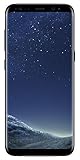
The best Samsung Galaxy S8 and S8 Plus deals
Best Samsung Galaxy S8 deals UK:
- Vodafone - £38/mth + £90 upfront (24 months)
- Unlimited mins & texts | 16GB (4G) data | Total cost £1,002
- Buy now from Carphone Warehouse
- EE - £42/mth + £30 upfront (24 months)
- Unlimited mins & texts | 5GB (4G) data | Total cost £1,038
- Buy now from Carphone Warehouse
- O2 - £40/mth + £90 upfront (24 months)
- Unlimited mins & texts | 5GB (4G) data | Total cost £1,050
- Buy now from Carphone Warehouse
- Three - £45/mth + £79 upfront (24 months)
- Unlimited mins & texts | 12GB (4G) data | £1,159
- Buy now from Three
Samsung Galaxy S8 review: Design
There will be no Samsung Galaxy S8 Edge this year. Why? Because the Samsung Galaxy S8 is the device the S8 Edge would have been. Samsung’s new flagship is a phone with curved edges, and there’s no alternative.The result is the best-looking phone on the market. Samsung has created an 18.5:9 “Infinity Display” that looks like no device you’ve ever seen before – well, none since the LG G6, anyway. The front of the phone is 100% glass, with the slimmest of bezels nestled above and below, resulting in an impressively high screen to body ratio of 84% (the Samsung Galaxy S7’s screen-to-body ratio was 72%).
This is a phone that feels great in your hand. It’s slim, smooth and light. However, it's also slightly over-engineered. It’s a tall phone, which causes some problems during use. Hold the phone in your hand as if you want to unlock it using the rear fingerprint sensor and you’ll struggle to reach the home button without readjusting your grip. Grasp the device so you can reach the home button, however, and icons at the top of the screen become unreachable.

There is, at least, a 3.5mm headphone jack here, which is refreshing to see in the light of many rivals removing it. To take advantage of this, Samsung is also including a rather nice pair of AKG earphones in the box. These are certainly a cut above the no-brand earphones normally included with your average smartphone, delivering music with a clean, balanced sound that's very pleasing to the ear.
They're comfortable, don't leak sound unduly at high volumes and, depending on how much you care about sound quality, could be all the headphones you need. Although it's a small thing it's good to see such attention to detail from Samsung.
Samsung Galaxy S8 review: Display
- Size: 5.8in
- Pixels: 1,440 x 2,960 pixels (570ppi)
- Super AMOLED
- Always-on display
Perhaps more significant is that it’s the only mobile phone screen currently that’s been certified by the UHD Alliance to the Mobile HDR Premium standard. That means, like a high-end TV, it’s capable of playing back HDR (high dynamic range) video content, meaning brighter highlights – up to 1,000cd/m2, according to DisplayMate – for an ultra-realistic image.
As I’ve already mentioned, the screen is curved along both long edges on the Galaxy S8 and the Galaxy S8+ phones this year and this brings into play similar screen functions to previous Samsung Edge phones. Swipe a finger in from the right and you can access shortcuts to your favourite apps and contacts, plus various other Edge screen apps, including a compass and news feed.

More significant is how the curved edges result in a wider display on a thinner phone. Edge apps are gimmicky; a display without bezel is genuine innovation.
Samsung Galaxy S8 review: Camera
Scroll up and look at those specs again. Notice anything unusual about this year’s camera? Yep, it’s exactly the same as the S7 – at least the specifications are. In an odd move, Samsung has stuck to the same 12-megapixel rear snapper complete with f/1.7 aperture, dual-pixel phase-detect autofocus and optical image stabilisation. The ‘if it ain’t broke, don’t fix it’ mantra rings true here.There's one teensy difference that sets it slightly ahead of its predecessor, though. Chipset improvements have seen an interesting new feature brought to light, in the form of multi-shot image processing. Every time you press the shutter button, the camera captures three frames, merging them together to form the sharpest image possible.
READ NEXT: Best phone camera 2017
In terms of quality, there is a difference. In good light outdoors, noise handling sees as a slight improvement, there's a tiny bit of extra contrast at the pixel level resulting in crisper-looking shots, and a refinement in colour reproduction. You have to look pretty hard to see the differences, though.
^ The Samsung Galaxy S8's shot is on the left here, and shows better control over noise and better detail capture than the S7's on the right (click through to view full screen)

The triple-frame capture makes more of a difference in low-light photography, where there's significantly less smearing and far more contrast and detail than with the S7's camera. It still isn’t as good as the results we've seen from the Google Pixel, but you definitely won’t be disappointed by the results.
^ In low light, the S8's triple-capture technique dredges up more detail while keeping a lid on ugly image noise. However, there's still plenty of softening and smearing due to noise reduction (click through to view full screen)

Samsung Galaxy S8 review: Security
There are six secure ways to unlock the S8:- Fingerprint
- Facial recognition (new)
- Iris scanner
- Pattern
- PIN
- Smart Lock (unlocks at trusted locations)
To be frank, none of the Samsung’s biometric unlocking schemes is particularly convenient. Technically, they work well, including the facial recognition (most of the time). The problem is that you have to manipulate yourself to fit their requirements, which is more effort than it should be.
For example, when the S8 is sat on a table facing upwards, none of these options are available to you. You need to hold the device up and bring it to eye level for the iris scanner to kick in, or lift the phone and point the selfie camera towards your face. (Note, you can’t use both the iris scanner and new face recognition interchangeably; you have to choose one or the other.)

The fingerprint sensor is located on the rear of the phone, so you have to pick up the device to use that and, to make matters worse, the fingerprint sensor is located on one side of the camera, which makes it easy to smear the lens with your finger while fumbling around trying to find it. This is a misstep, make no mistake about it.
Samsung Galaxy S8 review: Battery and fast charging
We all know the trouble Samsung has had with batteries of late, so maybe that goes some way to explaining why the battery performance of the S8 has gone backwards (compared with the S7 and S7 Edge).The new battery is less effective than the S7, but not by much. In our battery test – playing a looped video with the screen set to 170cd/m2 brightness in flight mode – it lasted 16hrs 45mins. While that’s still impressive, it’s nearly an hour worse than the Samsung Galaxy S7 (17hrs 48mins) and two hours short of the S7 Edge (18hrs 42mins).
The Galaxy S8 does come with a fast charger, which goes some way to compensating for this. It charged the phone from 0% to 37% in 30 mins, which is pretty good, but not earth-shattering. The OnePlus 3T, for example, promises a “day’s worth of power in half an hour”.

It's also worth noting that these test were carried out with the phone at mid-resolution (FHD+, or 1,080 x 2,220). If you slide the adjuster in the settings menu all the way up to native resolution – the quoted 1,440 x 2,960 – stamina falls by 17%, and if you go the other way and reduce the resolution to HD+ (720 x 1,440) battery life rises by 3%.

Samsung Galaxy S8 review: Performance
You’d expect a new Samsung flagship to have the fastest, most advanced internal components available– and that’s most definitely the case here. Us Brits and the rest of Europe get the S8 equipped with Samsung’s very own Exynos 8895 processor, while in the US handsets are equipped with the Qualcomm Snapdragon 835.Both of these are the first ever mobile phone chips to be manufactured on a 10nm process, which promises greater efficiency and potentially faster performance, and both offer the possibility of connecting at up to Gigabit 4G/LTE speeds as and when the networks upgrade.
So how does the Galaxy S8 perform? Well, you won’t be surprised to discover that it feels super-fast to use and that it tops the tables in all the benchmarks as well. In the Geekbench 4 multi-core test, it raced past the LG G6 and iPhone 7, with only the Huawei P10 Plus coming close.


Samsung Galaxy S8 review: Bixby
Finally, to Bixby – Samsung’s much-vaunted AI assistant. Think of it as a counterpoint to Samsung’s Alexa, Apple’s Siri and the Google Assistant. What’s it like? Let’s just say it’s a work in progress.Voice control wasn't ready to be used from launch, which seems a mite strange. However, since the launch of the Galaxy Note 8, Samsung made the voice-assistant available to Galaxy S8 and S8 Plus owners.
I did find its photo-recognition to be rather interesting. The idea is that you can take a photo of something, Bixby will recognise it and give you several options such as information from around the web or shopping options.
The accuracy of this varies wildly. Bixby was completely flummoxed by a Nike trainer, but successfully recognised a bottle of Heinz Tomato Ketchup and, oddly, the cloisters of Durham Cathedral. I suspect GPS may have come to its rescue in the latter example. In truth, I fear Bixby’s photo-recognition mode may be a gimmicky endeavour for Samsung. I struggle to think of a time when it will be genuinely useful.
Why An Armored-Up Samsung Galaxy S8 Active May Be A Phone Everyone Can Buy
- video playing
- Samsung Galaxy S8 And S8 Plus Get Bixby Voice...
- Is ...
Samsung Galaxy S8 review: Verdict
In the early years, Samsung dumped the very highest specs and features into its latest Galaxy S device, and dealt with the design thereafter.Since the S6, that’s been changing and the Samsung Galaxy S8 represents the very pinnacle of Samsung’s design transformation. The S8 is all about its 5.8in 1.85:9 curved-edged display and its beautifully sleek finish. And, to give Samsung credit, the phone does look fantastic.
There are some strange things about the device this time around, however. Usability isn’t the best. The battery performance has gone backwards (if only a little), and unlocking the device has become trickier.
So yes, the Samsung Galaxy S8 is the fastest phone around. It’s definitely the sexiest, and the camera is better than it was last year, too. But is it worth the asking price? That's for you to decide.
Samsung Galaxy S8: Full phone specifications | |
| Processor | 2.3GHz octacore Samsung Exynos 8895 / Qualcomm Snapdragon 835 (US only) |
| RAM | 4GB |
| Screen size | 5.8in |
| Screen resolution | 1,440 x 2,560 |
| Screen type | AMOLED |
| Front camera | 8MP |
| Rear camera | 12MP |
| Flash | LED |
| Storage (free) | 64GB |
| Memory card slot (supplied) | microSD |
| Wi-Fi | 802.11ac |
| Bluetooth | 5.0 |
| NFC | Yes |
| Wireless data | 4G (Gigabit) |
| Dimensions | 68.1 x 148.9 x 8mm |

Commentaires
Enregistrer un commentaire